Whether it’s your first time stepping into the kitchen or your thousandth batch of macaroons, taking time to calibrate your recipes for your own environment can do wonders to affect your final product.
With the help of Food Scientist Tristin Thompson from the University of Georgia, and Chef Chloe Jackson, we hope to take away any confusion surrounding high-altitude baking in your kitchen.
What’s altitude have to do with baking?
At just 1,000ft above sea level we start to see different results when baking ordinary recipes, with the severity depending on each recipe’s ingredient make-up. At altitudes above 3,000ft, the effects are so apparent that altitude-based adjustments are commonly a necessity. In a world with Michelin star pastry chefs at just 115ft above sea level in France, and home-bakers up in the 6,000-foot peaks of the Colorado mountains, finding a way to counteract mother nature is a must.
As we get further away from sea level, air-pressure decreases and starts to affect your food preparation in two ways. First, liquids will boil at lower temperatures, causing them to evaporate faster, and more noticeably, the gasses created by your leavening agents (think baking powder/soda, yeast, etc.) will be able to expand with less resistance and rise quicker than at sea level.
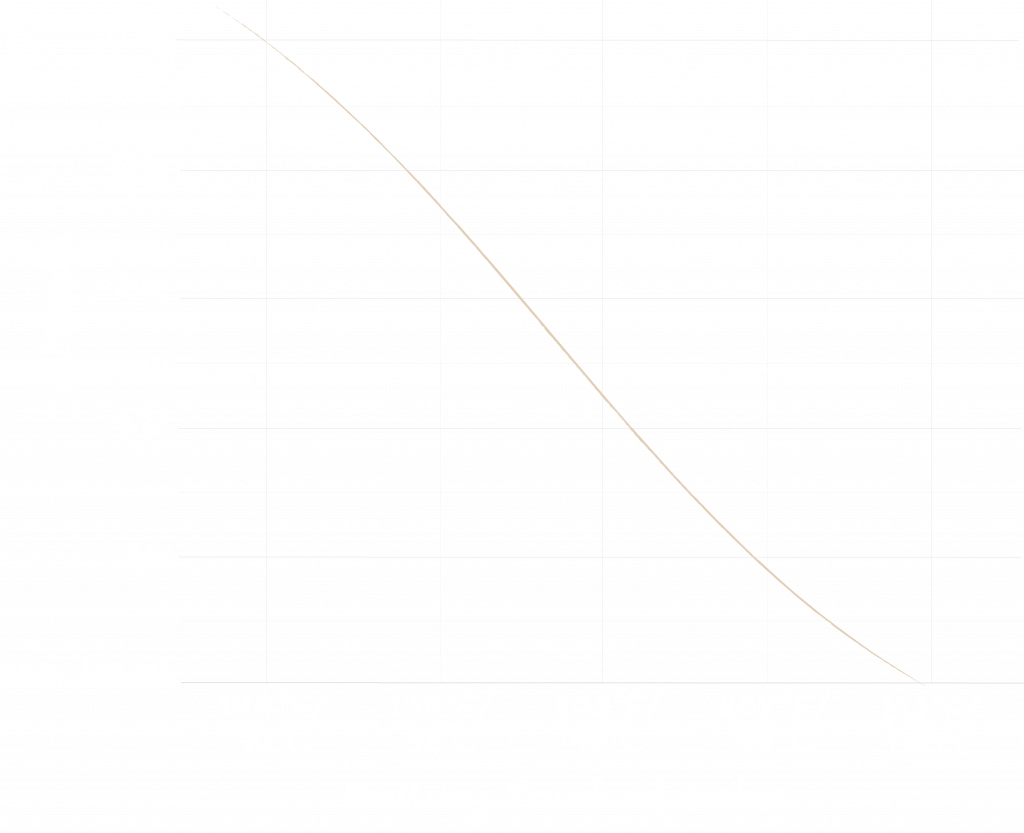
A quick dip into the data: From sea level, atmospheric pressure starts to decrease by around 1/2 lb per 1,000 feet. This results in a variety of effects on your ingredients, like what’s seen with the boiling point water of distilled water.
A quick dip into the data: From sea level, atmospheric pressure starts to decrease by around 1/2 lb per 1,000 feet. This results in a variety of effects on your ingredients, like what’s seen with the boiling point water of distilled water.
With that said, here’s what we’ve discovered to have the most impact on your day-to-day baking endeavours.

Illustrations by Ethan Andruchuk
Data Source: "High Altitude Food Preparation" by Colodaro State University https://extension.colostate.edu/docs/comm/highaltitude.pdf
What’s most important?
First and foremost, no matter how high up you are, trying the “sea level” recipe exactly how it was written out when first starting is still highly recommended. Not only is there a chance that it won’t fail, but you’re also able to see how your environment is affecting each individual recipe.
“Altitude adjustments are one of the things we actually didn’t learn through school. Because of how complex the interactions are between each recipe and their environment, it’s best to feel out what adjustments you need to make based on what your final product looks like,” said Chef Chloe Jackson, a recent honours graduate of the Southern Alberta Institute of Technology (SAIT) Baking & Pastry Arts program.
“Every recipe I make I have to keep our elevation in mind. If you’re going to the mountains you’ll have to decrease your water, down here you’ll have to add more because it’s so dry,” said Chef Jackson.
No matter how high up in the mountains you are, “One thing that’s crucial regardless is that you’re weighing your ingredients. I have over four kitchen scales, and use one for every recipe,” said Chef Jackson.
If you’re not weighing your ingredients to begin with, you’ll most likely see the biggest improvements by starting there.
Once you’ve baked your first batch to see how it turns out, now’s the time to start fine-tuning what exactly you should be changing for your next batch. More often than not, only minimal adjustments are needed to get your next batch perfect. However, figuring out exactly which direction you should take things is another story.
“In baking specifically, I’d say figuring out the balance between your leaveners (baking soda/powder), and wet : dry ratio to get your ideal finished product texture is quite tricky and very small adjustments can make an impact. Definitely an art to it, but some science as well,” said Thompson, when asked which parts of making altitude adjustments could be the most finicky.
Overall, the most important thing to keep in mind is that some of your sea level recipes may not need any adjustment whatsoever, and it’s best to give them a try first if you can. As Thompson puts it, “At the end of the day, it’s primarily trial & error, with initial ideas coming from past experience.”
Contact Ethan Andruchuk at @ethandruchuk on Twitter